Showing posts with label recurring. Show all posts

Friday, January 12, 2018

Baby Lapsit 1-12-18

First Baby Lapsit of the new year, and the first time in a while that we've had this program on a Friday. There were several new faces today, so before we got started I had everyone go around and introduce themselves, their baby, and tell us how old their baby is. I like to do this with smaller groups, especially with younger kids, because a lot of them are first-time parents without a lot of parent friends. Also, a lot of the caregivers who attend my Baby Lapsit classes are stay-at-home moms, so it's a great opportunity to break the ice and be social with other parents.

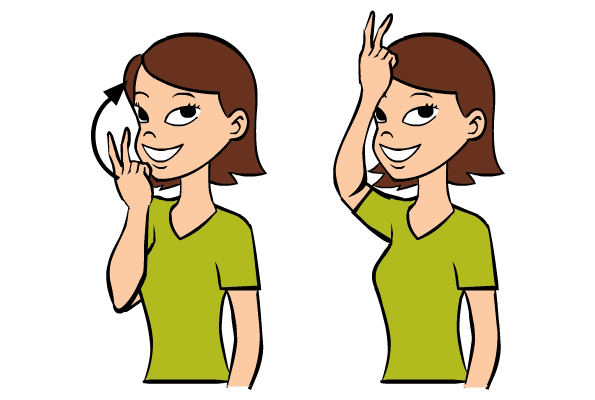
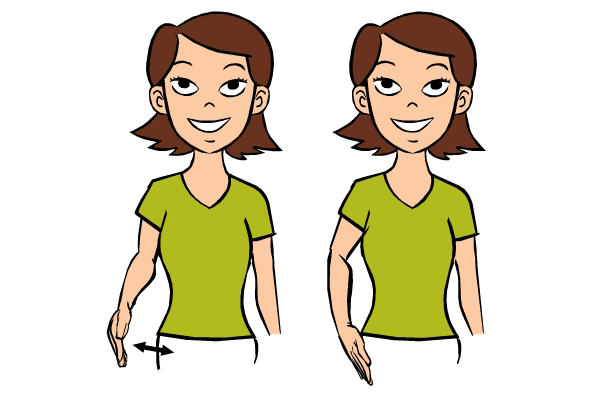
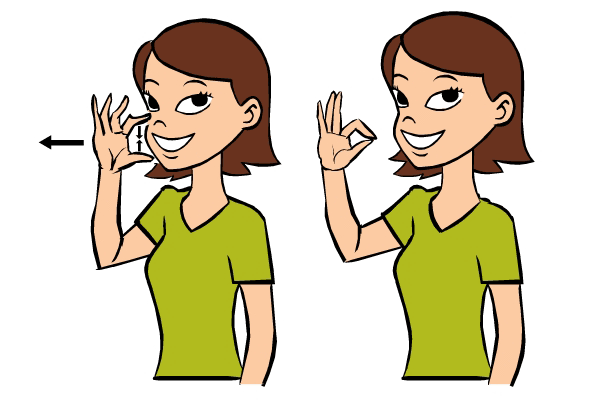
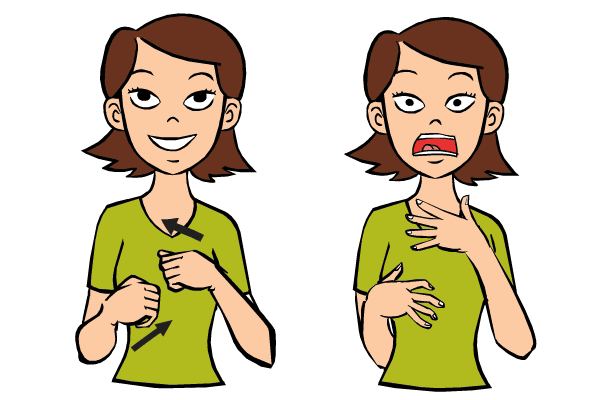
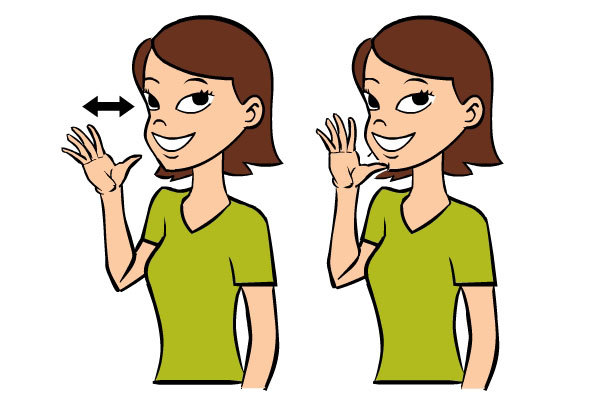
As always, first we sang hello to all our friends. Then, our first book of the day was Roar: A Big Mouth Book of Sounds from the My Little World series. This book is fun because it has a short rhyming verse on each page, each talking about a different animal. Before the holidays, I asked our Lapsit families to fill out surveys about what they would like to see from the program, and an overwhelming number said they wanted to learn more sign language for their babies. So in the new year, I am going to try and teach three or four signs each time. During this book, we learned the signs for lion, goat, puppy, and kitten, as well as scared. I encouraged the grownups to do the signs with me, and help their baby do them as well.

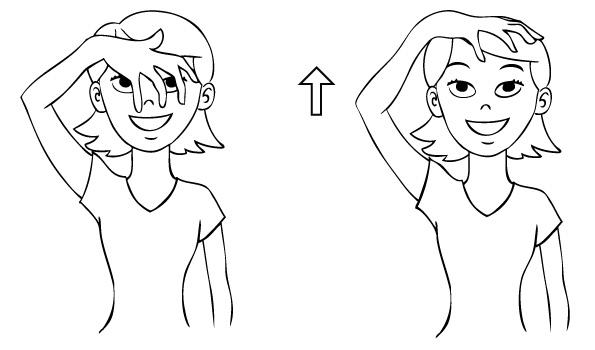
ROAR BB
Image result for sign language lion
Lion
Image result for sign language goat
Goat
Image result for sign language dog
Puppy (dog)
Image result for sign language cat
Kitten (cat)
Image result for sign language scared
Scared

Next it was time for our lap bounce journey and it began, as always, with "Bumpy Road." I have a few regulars who have come to Baby Lapsit continuously since their babies were only a couple months old, and they know this chant by heart now. Grownups are instructed to seat their baby facing forward on their laps and bounce along with me as I demonstrate with a roughly baby-sized teddy bear. Here is the chant:

Bumpy road, bumpy road. (Bounce baby on lap)
Smooth road, smooth road. (Move baby smoothly back and forth)
Bumpy road, bumpy road. (Bounce baby on lap)
Smooth road, smooth road. (Move baby smoothly back and forth)
Rough road, rough road! (Bounce baby higher than before)
Bumpy road, bumpy road. (Bounce baby on lap)
Rough road, rough road! (Bounce baby higher than before)
Hole! (Hold baby under armpits and let them fall between your legs)

Because I haven't done this program in a while, I hauled out my classic "Noble Duke of York" for our musical lap bouce. Since it is one of the longer songs and I needed to leave plenty of time for community play time, we only did one lap bounce song today. 


Our second book of the day was I Am Kind by Jen Porter. The main character of this book talks a lot about her dog, so I used this opportunity to refresh the sign for "dog," as well as teach the sign for "mom."

This book is part of Porter's "I Am" series (I Am Tidy, I Am Good, I Am Brave), which are simple rhyming verse stories perfect for toddlers. They model good behavior at a level very small children can understand and will want to emulate. 
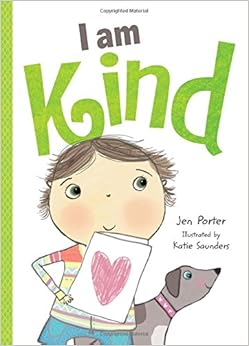
Image result for book i am kind jen porter

Image result for sign language mom

In keeping with the effort to use more sign language, we did "Hush Little Baby" as one of our movement songs. Here are the signs I use when teaching this song:


And here is the version of the song I use. It's pretty short, so we usually end up doing it 2-3 times so everyone can get the hang of the sign language. 

Next, we did everyone's favorite body part identifying song, "One, Two Hands" by the wonderful Laurie Berkner. 


And finally, we said goodbye to all our friends by playing Peek-a-Boo, singing our goodbye song, having bubbles, and then having a 15-minute community playtime session with toys. It was a great first day back with the babies!

Thursday, December 21, 2017

YA Diversity Book Club 2017

My vision for this book club is to provide a space for all teens who enjoy reading and talking about what they've read. I put the word "diversity" in the title because we focus on books in which the characters belong to marginalized communities: racial, ethnic, disabled, LGBTQ+, homeless, mental illness, abuse, etc. I have found that reading books that explore marginalization is a great way to open up the conversation in a non-threatening way. After reading these books, kids will open up about similar experiences they have been through or witnessed their friends going through. It's part book club, part safe space, and part social; I want my teens to leave this club knowing that I am here for them, as are their new friends, if they are having a hard time for any reason.

Since I have not been keeping up with entries about my teen book club since I started it in the summer, I figured I would do a 2017 wrap up and then start monthly entries about it in 2018 as meetings happen.

Reception about this program has been varied, because the type of highly-motivated teens that a book club tends to attract are also super busy with other extracurricular activities. During the summer, a lot of our teen volunteers were very involved, but that dropped off in September when everyone went back to school. I still have exactly one very involved member, who has been doing their best to talk it up at school and their other activities. For the moment, however, I am just working on getting the word out and recruiting more teen readers.

January will be a planning meeting where I'm asking the kids what they would like to read. I am trying to lure them with pizza, so we'll see if I get any new members.......

In the meantime, here are the books we read in 2017 along with Goodreads links, why they fall into the category of diverse books, and a short review.

September: If You Could Be Mine by Sara Farizan

I fell in complete love with this book. Farizan does an amazing job of explaining the difference between being gay and being trans to readers that might not understand it, without breaking out of the character's voice. The ending was heartbreaking, but also exactly what I hoped would happen.

It's diverse because: Iranian culture, LGBTQ+ themes (lesbian and trans)


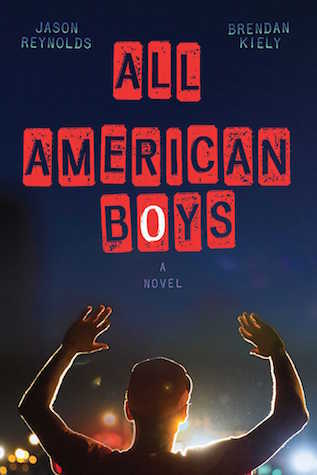
October: All-American Boys by Jason Reynolds and Brandon Kiely

I actually originally read this book for a class in grad school about YA literature. It's very timely because it talks a lot about a Black Lives Matter-esque movement without actually using the name of the real-life movement. Alternating between the POVs of two teen boys, one white and one black, we get to see all sides of a story dealing with police brutality.

It's diverse because: Racial issues and teaching tolerance

25657130

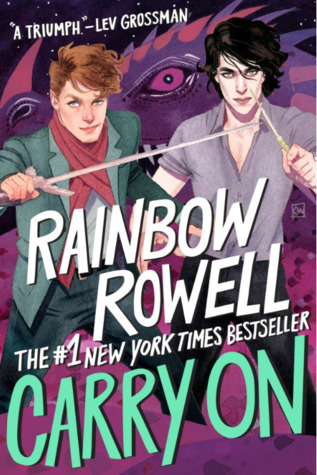
November: Carry On by Rainbow Rowell

I have to say, I am not usually a fan of fantasy, but I loved this book! It's like the Harry Potter universe, except the kids sometimes drink, curse, and have sex. The spells are also much more modern, and it explores the idea of magic being a concrete substance that you can own, spend, and run out of. Also, Rowell does an amazing job of writing in British voices across all six or seven narrators, even though she herself is American. Halfway through reading I found out that it is actually the book from Rowell's other novel, Fangirl, and was written after Fangirl was published and popular. Now I have to read that one as well!

It's diverse because: British culture, LGBTQ+ themes (gay)

32768522

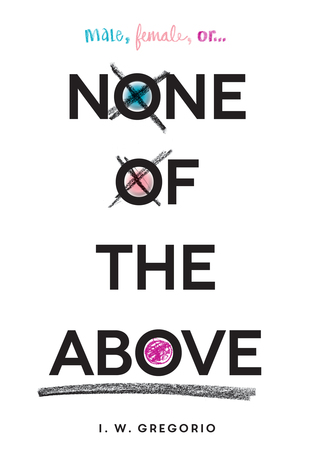
December: None of the Above by I. W. Gregorio

I read this book last year and did not have a chance to re-read it before our December meeting, but I still remembered it well enough to have a conversation about it with the one member who showed up. I like it because it is written by a doctor who specializes in Intersex patients, so all the medical facts are correct. Gregorio also does a great job of capturing all the characters' emotions, especially the main character's. What I dislike about this book is the utter cliche that is Kristin's high school life. She's a pretty, popular athlete who desperately wants to win Homecoming Queen and have sex with her boyfriend, and then it all comes crashing down when she finds out that what has been masquerading inside her as ovaries are actually testicles. The only downside to the diagnosis as far as I can tell is not being able to have biological children, if you wanted them. Otherwise, the devastation Kristin experiences and the merciless bullying her schoolmates subject her to when they find out seems incredibly dramatic and over the top. The best character is the mentor she finds through an Intersex support group, a self-assured lesbian who helps her understand her condition and develop a new outlook on life. But, it's a worthwhile read and a great example for teens of how to accept yourself no matter what curve balls life throws at you.

It's diverse because: LGBTQ+ themes (intersex)

22896551

Wednesday, November 15, 2017

Mad Science: Cranberry Chemistry and Architecture

Once again, in today's Mad Science we had two experiments. The first one focused on chemical reactions, and the second was a hands-on skill builder to practice spatial relations and exercise motor skills. I should note, I did not plan this program on my own. My partner youth librarian Sara is out with an unexpected illness this week, and I have been taking over her programs. She planned this and left me all the materials, so this morning my only job was to read up on the scientific concepts and carry out the program. We did cranberry-theme experiments today, to be festive and Thanksgiving-y.

Here is experiment one: Cranberry Chemistry.

Materials needed:

  • Cranberry juice (unsweetened or no sugar added)
  • Lemon juice
  • Baking soda
  • Clear plastic cups
The lesson for this experiment is to learn about the chemical reactions between acids and bases. It helps to have the visual aid of a pH scale on the wall, and talk to the kids about acidic, basic, and neutral liquids. It also helps to label where the liquids you'll be working with fall on the scale. I labeled where baking soda (9, very basic) and lemon juice (2, very acidic) are. I drew one on the white board, based off this picture:

Image result for ph scale

First, we poured some cranberry juice into our cups and noticed that it is a dark red color. We talked about the fact that cranberries are an acid because they contain anthocyanins. We repeated that word a whole bunch, because it's long and hard to pronounce. I also wrote it on the board so they could sound it out if they were visual learners.

ANTHOCYANINS!

Anthocyanins are pigments that change color depending on whether they are reacting with an acid or a base. Cranberries, and therefore cranberry juice, naturally contain anthocyanins. 

After the cranberry juice was poured, we added a small amout of our base: baking soda. The juice is supposed to turn bright blue; we got as far as a half-hearted purple color. So technically the experiment worked, and it worked well enough to prove the scientific fact of anthocyanins true, but it was not the exciting and vibrant color I had hoped for.

The next step was to add another acid, lemon juice, back to the solution and watch it turn back to it's original red. This also pretty much worked. We did end up with cups full of red liquid again, and were able to discuss how the ANTHOCYANINS reacted with the acid in the lemon juice. 

Here is experiment two: Cranberry Architecture.

Materials needed:
  • Fresh cranberries
  • Toothpicks
The lesson for this experiment was mostly just to have fun. I demonstrated making a simple cube with the cranberries and toothpicks, then invited the kids to make one too. After they all mastered the cube, I gave them about 10 minutes to make whatever they wanted. 

Image result for cranberry toothpick architecture
Source: Little Bins for Little Hands
Then, I issued the kids a challenge: build the highest structure you can that will support the weight of a jumbo marshmallow. I gave them 10 more minutes to alter their creative structure, or tear it down and start something brand new. Then, after everyone was done, I balanced a marshmallow on the highest point of each one. Here is our winner with her giant cranberry tower! If you look closely, you can see that there are actually TWO marshmallows nestled in between the toothpicks. (I did get permission from her guardian for the picture to be posted).


I liked the cranberry architecture because it helps kids of all ages and developmental stages enhance their fine motor skills, motor planning, and spacial relations. It also helps them gain patience with manual projects and maximizes finger dexterity, which will come in handy for crafting, playing musical instruments, and typing. 

Here is the hand out that I sent home with each child, telling them about the experiments we did in case they want to recreate them at home. Click the image for a closer view.

Mad Science is a challenging program for me to host. I have never been very science-minded, so all my scientific information comes from Google and all my ideas for this program come from Pinterest. However, I had a great time working with these kids doing the cranberry experiments today. Programs like this, with more structure and smaller groups of participants, are great because you get more one-on-one time with the patrons. It's more like being a classroom teacher. I've said it before, but that's one big reason why I love being a librarian: you get the best of all educational worlds!

Thursday, November 9, 2017

Write Your Own Picture or Comic Book - Week Two

This is week two of a four-week writing program for tweens age 8-12.
Week One
Week Three
Week Four

Last week we had four extra kiddos who didn't sign up, and today we had five more! While we can technically turn people away from an event when they have not registered, I hate to tell anyone they can't participate in a library program. Counting some parents who wanted to stick around and watch, we filled our tiny room with twenty people not including myself! All twelve laptops were out and running, with sibling sets sharing again.

Our icebreaker today was another Wacky Web Tale from Eduplace. Today's puzzle was called "Could it Really Happen," and since we used it as an ice breaker, I asked that each child fill in their own name for "friend." They worked on it for 15 minutes, then had a chance to share with the group.


After everyone shared, I brought attention to how different every single story was. Even though they all filled out the same form, the adjectives and nouns and verbs they chose made them completely different stories! This point segued nicely into the next activity of the day, learning about plot structure.

I doctored up this image to include definitions, and then shared it with them on a PowerPoint:


I picked five readers, and had each one read a different definition out loud to the rest of the group. Then, I asked each of them to think about a story they had read lately, and fill in the plot points to each definition. One of the kids was really excited about the book Wonder by RJ Palacio, so I asked him to go through each point in the plot diagram and tell me which parts of the story match up. He came up with:

Exposition: Augie has had a lot of surgeries because of a facial deformity, and has never been to real school.
Rising Action: His parents decide to send him to school, where he meets some kids who are nice and others who are bullies.
Climax: He finds out that one kid who he thought was a friend is actually a bully, and makes fun of Auggie behind his back.
Falling Action: With the help of his friend Summer, Auggie thinks about how everyone should just choose to be kind to one another. His "bully" friend apologizes and they become friends again.
Resolution: The school year ends, and some of the kids show they have learned to become a little kinder through their made-up precepts assigned by their teacher.

After this completely stellar example, I set the kids free with laptops, pencils, and notepads, with instructions to come up with their own story that fits into these five plot points. It could be a true story, something that has happened to them, or something they made up. A couple of the kids had some trouble getting started, but for the most part they were able to fit the happenings of their story into these boxes. I'm excited that they all seemed to understand the concept as they worked on their stories!

Thursday, November 2, 2017

Write Your Own Picture or Comic Book - Week One

This is week one of a four-week writing program for tweens age 8-12.
Week Two
Week Three
Week Four

I required registration for this program, because there is a limited amount of space where we held it. Also, I decided partway through the planning that we would be using laptops, and my library only owns twelve laptops.

As of yesterday, the registration was full at twelve participants plus two on the waiting list. Ten of the registered kids showed up, plus four that I was not expecting. Even though two were without laptops, there were chairs for everyone so I invited them all inside.

Our first activity was on Houghton Mifflin Harcourt's website Eduplace, and was basically an online version of MadLibs called Wacky Web Tales. With two sets of siblings sharing a laptop, I challenged the kids to find the website and then fill out the tale entitled "The Box." Since we used this as an ice breaker activity, I told them that their own name had to appear somewhere in their tale. They had 15 minutes to fill it out, then we went around and shared.


For the rest of the session, I let them work on their choice of two websites: Story Jumper or Storyboard That. Story Jumper presented the unexpected complication of needing users under 12 to go through a long and involved process to get parent permission to use the website, so most of the kids ended up on Storyboard That for today. They had a great time making their own comic strips, and exploring the website. Here is my example strip that I created on Storyboard That:


I feel that it's important to let tweens and even older elementary schoolers explore the internet in an only somewhat structured environment. This way their activity can still be monitored, but they figure out how to browse and make things happen on their own. I originally had a more regimented lesson plan for today, but because it was the first session, I thought it would be fun for them to look at character and setting options without putting too much pressure on the session.