Tuesday, July 31, 2018

Education: What to Expect

The premise of this program was simple.

  1. Form a panel of 5-8 high school juniors and seniors.
  2. Acquire an audience of incoming high school freshmen.
  3. Take questions from the audience and have the panel answer.
In execution, the program worked almost as well as I had hoped. I was lucky enough to run it two times, both with very different results.

The first time I ran the program, it was at my library. Since it was still summer I had all 35 of my teen volunteers at my disposal so finding the panel was easy. Six signed up and five actually attended, which you know is pretty good odds if you've ever worked with teens. The audience members consisted of two other teen volunteers who were about to enter high school, and one new kid who I had never met before. With an evening teen program two weeks before the beginning of the school year, I considered one brand new patron a major success.

When the participants walked in, there was a pile of paper slips and pens, along with a box to deposit any questions they wanted to ask anonymously. I had also stuffed the box with some questions in case attendance was low.

The "panel" set-up was quickly changed by the teens to a more informal seating arrangement. They decided that since there were only 8 of them, they would rather put their chairs in a circle so everyone could see everyone. They all introduced themselves with their name, school, grade, and whether they were a member of the audience or the panel. Then panel members took turns answering questions from the box, and some that the younger kids asked out loud after the ice was broken and they were feeling less shy. It turned out that most of the kids in the room were students at the closest high school to our branch, so they all had a lot of specifics to talk about: teachers to avoid, which extracurricular activities and clubs were worth the time, dress code, etc. After all the questions were answered the group got some time to mingle with cookies and hot drinks. It was a very small, but overall successful and positively received program.

The second time I did this program, it was entitled "Eductaion: What to Expect." I did it with my One N Ten outreach group, which has kids ages 12-24 and tends to tip the scale toward the older end. Most of those kids are older high school students, or already in community college or the workforce. "What to Expect in High School" wouldn't have kept their interest for very long since most of them have been through that stage in life already, so the group facilitators helped me tweak it to their needs.

The One N Ten group is quite large, usually between 30 and 40 youth, so I took volunteers who thought they'd like to answer questions about the following four subjects:

  • High school
  • Community college and/or 4-year university
  • Straight from high school to the work force
  • Trade school as opposed to traditional college
There were several volunteers for each, so we took the panels in shifts. Four at a time, one youth to speak on each subject took a spot in one of the four "hot seats" set up in front of the rest of the group. Each member of the group, whether they were speaking on a panel or not, were asked to write down a question on one of the topics. After collecting all the questions, I sorted them into categories and asked each member of the panel one question on their topic. After each member had answered one question, they switched out and the next four got a turn. We did this four times, with 16 youth getting a chance to speak to the group about their own experiences, before group time was up for the night.

Seeing this program happen twice in two drastically different settings was so rewarding. The smaller program that took place inside the library focused mostly on one particular high school, and it was great to see the younger kids making connections with upperclassmen and watching first-day anxiety melt away as they heard that high school won't be that scary after all.

The large group at One N Ten was a breath of fresh air in terms of people telling their success stories that have nothing at all to do with a traditional college path. As someone who was privileged enough to go to a 4-year college straight out of high school, and then continue on to higher education after than before landing a professional career very quickly, I don't feel qualified to speak on the who, what, where, and how of things like community college, trade school, and working full-time straight out of high school. However, I want to present all of these options as real and valid for the youth that I work with, because college is incredibly expensive and not the right path for everyone, especially depending on what field you want to enter.

I have found that the best teen programs are the ones where I hardly talk at all. I love to ask a question, share some of my own insight if necessary, but mostly let the teens talk among themselves on the given topic. They have so much knowledge and have lived a fair amount themselves, even though they are young. I love letting them talk, because the younger you are, the less frequently you are given that opportunity. In programs like this, my only rule is one I actually borrowed from One N Ten because it perfectly sums up how to give respect to your fellow participants: One Diva, One Mic.

All About Teen Volunteers

This summer, I was tasked with being in charge of the teen volunteers. If you've ever worked in (or visited) a public library in June and July, you've probably been at least peripherally aware of teen volunteers working there. They are incredibly important to making the Summer Reading Program happen because it is, as I lovingly refer to it, the children's librarian Olympics. We are constantly running, programming, craft-prepping, and helping patrons at a wildly accelerated rate. We couldn't do it if it weren't for those amazing teenagers who need community service credit to graduate high school (and/or are just good people who want to help out) (and/or couldn't find a paying job and their parents want them doing something over the summer). Whatever the reason, we're thrilled to have them.

After our system's volunteer coordinator forwarded me all 30-odd applications, I sent out two emails. The first was to people who had never volunteered here before, asking them to come in for an interview. I set aside a couple of Saturdays and scheduled four teens per hour. I saw each of them for 10-15 minutes, during which time I asked them a few questions to get to know them better and find out where they would be best suited to work in our library. I didn't turn anyone away; simply presented them with the forms to get their badges and welcomed them into the program. I consider the interview more of a formality than a necessity; it gives the kids job experience and gives me a chance to meet them one-on-one before the summer starts.

The next step was to organize a mandatory orientation. I had one on a weekday evening and the other on a Saturday morning, and let all 35 volunteers know that attending one or the other was a requirement for participating in the program. Orientation included individual introductions, icebreaker games, popcorn reading off a PowerPoint to make learning the rules a little more engaging, and then standing up for a high-energy shelving activity lead by the manager of our pages. At the end, one of our other children's librarians ran a Jeopardy-style trivia game about the rules we had discussed earlier in orientation.

The best part of orientation was inviting any staff member who wanted to attend. This had not been done in the past, which caused a bit of a disconnect between non-youth services staff and the volunteers. This year, several managers and librarians from other departments attended, which was great for both sides to get to know one another.

Once everyone was oriented, I made schedules for the SRP desk, weekly storytime helpers, and one-time program assistants. Some of the scheduling was done manually in Excel, and for other parts of it I used SignUpGenius.com. Something new that I implemented this year was a daily reminder email sent out to all teens who would be working the next day. I found this cut down on the kids forgetting their shifts or being late.

Possibly the biggest bummer of facilitating teen volunteers is keeping track of discipline. We did have several instances of volunteers having their phones out during programs or desk shifts, which can become a disciplinary offense if it happens a lot. The bigger infractions were being late or missing a shift without calling; we made it clear that two no-call-no-shows equals termination, and there were two instances of this over the summer. In terms of discipline, our entire department learned that we will need a more consistent flow chart for next summer. 

The best part was pinpointing the volunteers who exhibited leadership skills and having the bility to give them more to do. For example, three of our most dedicated volunteers were my assistants during Theater Day Camp, where they often lead games and acting lessons while I only supervised. I loved seeing these young people blossom into leaders!

An important end-of-summer ritual is the teen volunteer thank you party! All three of our children's librarians worked together to plan the party complete with food, gifts, and activities for the kids to enjoy. The party was held after-hours in the library, and they got to run wild in the empty stacks for a scavenger hunt! After that we had dinner and a karaoke party in the Program Room.

I am excited to say that overseeing the teen volunteers is something I will continue to do throughout the 2018-19 school year, so I might be posting updates about our year-round volunteers periodically!

Wednesday, July 25, 2018

Toddlertime 7/25/18: The Moon

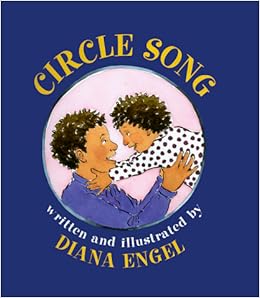
Theming Toddlertime on the moon happened completely by accident. I found the book Circle Song by Diana Engel, and the rest of the planning sort of fell into place after that.

We did our usual intro, and then read Circle Song. This book has a few more words than I would usually prefer during a Toddlertime, but it is a sweet bedtime tale full of love and positivity. One of the circles mentioned in the book is the moon, so I decided to find a felt story about the moon as well and loosely theme the day on that.

Image result for book circle song diana engel

I wasn't able to find a movement song about the moon, so we went with one of my favorite standbys, "Clap Your Hands."

Click here for the version of "Clap Your Hands" that I use. 

For our felt story today, I used "The Moon Up Above." To the tune of "Wheels on the Bus," we sing...

The moon up above is big and bright,
Big and bright, big and bright.
The moon up above is big and bright
In the sky.

The moon up above is near the stars,
Near the stars, near the stars.
The moon up above is near the stars
In the sky.

The moon up above helps me to sleep,
Me to sleep, me to sleep.
The moon up above helps me to sleep
In my bed.

With each verse, I add the felt piece that corresponds. Sometimes we sing each verse twice through; once as a slow call and response and once together as a group, depending on how quickly the families catch on to the lyrics and melody.


Finally, it was time to say goodbye until next time!

Wednesday, July 18, 2018

Toddlertime 7-18-18: Dogs

Today our Toddlertime theme was dogs and it was a ton of fun!

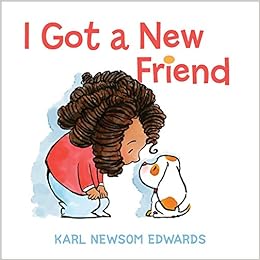
After our usual hello and intro, we read I Got A New Friend by Karl Newsom Edwards. I loved reading this to a group exactly as written, then right before turning the page to reveal that the dog was narrating the whole time, asking the kids who they think is talking. Today no one guessed that the dog was talking about their new friend, the little girl!

Image result for book i got a new friend

Our first movement song was "Happy and You Know It," which isn't necessarily related to dogs but is a very fun wiggle-reducer. I love the Mr. Jon version because he brings out the tickle bugs.


For our felt story today, I went for a throwback and did BINGO. Keeping it super simple, I put a picture of a farmer up for ~atmosphere~ and then the large letters B, I, N, G, and O that I printed off the computer, laminated, and backed with velcro We sang the song as a group, eliminating one letter each verse and clapping in its place. At the end, I put all the letters back and we sang a final verse with all five letters. While singing, I did my best to point to each letter to help the kiddos make the connection between the letter we were verbalizing and what it looks like.


Our final song before saying goodbye was "Clap Your Hands," the eternally crowd-pleasing directed movement dance.

Click here for the version of "Clap Your Hands" that I use. 

Thursday, July 12, 2018

Sign Language Storytime: Numbers and Counting

My Sign Language Storytime format is:
Intro and hello
Felt story
Movement song or video
Book
Movement song
Goodbye

This storytime is special for a couple of reasons. First, it's the only one that I give a handout with pictures of the signs on it, so that the kids and grownups can refer to it during storytime and then practice at home. Second, I'm experimenting with adding an AV component to storytime by showing videos to follow along with instead of just listening to songs.


Handout:
Intro and hello:
Hello: "Hello Friends"
Before turning on the music, I teach the kids (and grownups) the American Sign Language sign for "friends." Then we boogie, wave, and sing hello to all our friends!

Warming Up Motor Skills: "Open, Shut Them"
On this song we do the movements described in the lyrics: open our hands, close our hands, clap three times, put our hands in our lap, creep our fingers up to our chin, and don't let them in our mouths.

Stretch: "Tall/Small"
This is a short, easy stretch the kids get a kick out of. While we're stretching, I like to encourage them to reach for the ceiling, touch their toes, then make themselves into a tiny ball.

Felt Story
"Five Little Monsters"

This story doesn't particularly lend itself to counting, so before the story starts I have the kids count all 5 monsters with me. Then we do it again at the end as the monsters are going to bed...they each hide under the bed very slowly so we have time to count them :p

(for some reason when I took pictures of felt stories I could only five four... but there used to be a purple one, too)

Five little monsters sitting on the floor
The red one said, "Let's knock on someone's door."
The green one said, "Let's act a little scary."
The purple one said, "Why are we so hairy?"
The blue one said, "I hear a funny sound."
The orange one said, 'There's no one else around."

Then WHOOSH went the wind, and "EEK," they all said.
So the five little monsters hid under the bed.


Video
"The Counting Song" by Signing Time
During the video, I encouraged everyone to practice along. Using videos in storytime is still something I'm trying out, but it's going well so far.


Book
Grandma's Tiny House by JaNay Brown-Wood
Adorable book with rhyming text about a big family gathering. Kids helped count the groups of family members up to ten.


Movement Song
"Jumping and Counting"
This song gives a great opportunity to get all the wiggles out, and sneaks in some counting as well.


Goodbye
"Until We Meet Again" from Out of the Box
When we sing this song, I help them recall the sign for friends from the hello song, and teach them a couple others as we sing: meet, time, and say.


Friends
Meet
Goodbye
This is the only storytime that I don't close with bubbles, because directly following is another program called Stay and Play where I set out 4-5 bins of toys for a 30 minute free play. Adding bubbles to that seems to be too much stimulation.

Wednesday, July 11, 2018

Toddlertime 7-11-18: Shapes

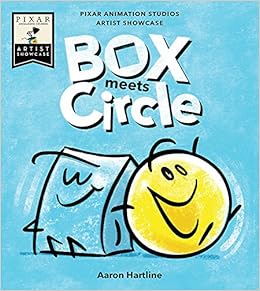
After our hello this morning, the first story for shape-theme Toddlertime was Box Meets Circle by Aaron Hartline. I knew the art in this book would be a hit with the toddlers because it's fun to look at and draws your attention. It's also a cute story about friendship with few words per page, and introduces the basic idea of squares and circles. To get the kids involved in the reading, and therefore engaged instead of distracted, I had them name the shapes on each page ("Who is this again?" "CIRCLE!")

Image result for book box meets circle

The first movement song of the day was "Follow the Leader" by Ella Jenkins. This song is an old/new discovery of mine. I knew Ella Jenkins as a child and went to a few of her concerts when I was in preschool, but have recently re-discovered her and have begun using her call-and-response songs in storytime. I especially like "Follow the Leader" because it's mellow and strangely enchanting. As soon as I put it on and start clapping along, the kids immediately calm down and start following me.


In lieu of a second book, I like the second story in Toddlertime to be an interactive felt story. Today I had regular old felt shapes I cut out myself, and we sang a call-and-response song for each one:

Do you know what shape this is?
Shape this is, shape this is?
Do you know what shape this is,
In my hand?

Circle is what shape it is,
Shape it is, shape it is.
Circle is what shape it is,
In your hand.

Lather, rinse, repeat with at 3-5 shapes. We did circle, square, triangle, rectangle, and star.

Jbrary has a similar song. It's been a while since I shouted out those awesome ladies, so here's their version. The tune they sing to is the same one I use with the felt shapes and song above.


Our final movement song was "Clap Your Hands," which is always a hit with the extra-wiggly toddlers.

Click here for the version of "Clap Your Hands" that I use. 

And then we sang "Peek-a-Boo" and said goodbye to our friends with bubbles and toys.