Tuesday, October 31, 2017

Spooky Singalong

This program was the brainchild of my wonderful and talented partner in crime, the other youth services librarian at my branch, Sara. She conceived, named, and planned this whole thing. Hopefully she will have her own librarian blog soon so that I can link to her entry about Spooky Singalong and give her all the recognition for this incredible event. Until then, here is my take as one of the staff members who helped set up and run it......

First of all, I will not be writing up our actual Halloween storytime and parade because I didn't get enough pictures of our super cute tiny patrons in their costumes, nor did I get permission from any of their parents to share those pictures in a public forum such as a blog. So here is a picture of me, Sara, and our temporary (she is getting a promotion!) third youth services librarian Nicole on Halloween day. I am a unicorn, Sara is a dinosaur, and Nicole is the human embodiment of the spirit of Halloween itself. 


Now, for the Spooky Singalong program. We did a Disney Karaoke program during Summer Reading, which was an awesome success with almost 100 people coming to sing iconic Disney songs and dressing up as their favorite character. So for Halloween, we had a similar program with some troubleshooting that we learned from the Disney event. 

First of all, most of the participants at a weekday program are not yet in kindergarten, so they are not fluent readers. Instead of playing actual karaoke tracks with words on the screen but no vocal track, we played songs with vocals intact. Second, instead of have children sign up to sing one by one (like karaoke in the real world), we structured this program as a storytime/karaoke hybrid and called it a singalong!

The prep for this program was insanely easy. Sara found a great playlist of preschool Halloween songs with animated videos, and we projected it on the wall of our programming space. There were rows of chairs set up, but everyone was encouraged to get up and dance around as we sang. 

In addition to their Halloween costumes, which most of them wore because tomorrow is Halloween, there was a craft station set up where kids could cut out and decorate their very own cardstock "monster feet." Sara printed the templates onto cardstock a couple of days ago, but we did not cut them out ahead of time; manipulating scissors helps develop fine motor skills! (Plus, less craft prep). After the feet were cut out, there were art supplies available to decorate them.

Image result for monster feet craft

Here is a video that is 30 minutes long, and almost the exact same as the playlist we used. All the music played for the Spooky Singalong were from Super Simple Songs, which I know I've shown on this blog before in my storytime entries. 


One song that we did use for the Spooky Singalong that is not in the compilation above was the Halloween version of Baby Shark. I couldn't not include it in this entry, so here it is separately:

Monday, October 30, 2017

Pumpkin Mosaic Art

Since it's October, I hosted a drop-in craft for all ages with the theme of pumpkins. Living in Arizona, it's sometimes hard to remember which season it is by looking outside, because it stays in the 90's well into November and then suddenly drops to the mid-50's until Spring. So, we overcompensate for our lack of weather with extra decorations.


This is the example I made of a mosaic pumpkin. This is a fun art project that you can easily tailor to any age group, which was lucky for me because I had a family with a baby and a preschooler, a set of three pre-teen siblings, and lots in between.

Making a pumpkin mosaic includes four basic steps:
1. Paint a piece of white paper your desired pumpkin color (fun to mix paints and create a custom shade). Wait for it to dry. We had Halloween and Autumn coloring sheets to work on while we waited.
2. Cut your custom painted paper into strips, then cut the strips into triangles, rectangles, and squares.
3. Fit your new shapes onto a construction paper pumpkin and glue them down.
4. Decorate with googly eyes and a Jack-o-Lantern smile!

This project is great for motor skill development because of the painting and cutting with scissors, and also helpful in developing spacial awareness by fitting the pieces together on the pumpkin.

I thought I got some pictures of our awesome final products, but I can't find them now! So instead, here is a .gif of a librarian (and/or model) wearing a dress I wish I owned in front of a photo backdrop I wish I owned, and my promise to be better at taking pictures of adorable children's art in the future.

Friday, October 20, 2017

Learn & Grow with Rhythm & Flow 10-20-17

Hello again!

After our usual introduction, we clapped the syllables of individual children's names using the "Heckity Peckity" chant.

Heckity peckity bumblebee,
Won't you say your name for me?
Bzzzzz (Bee buzzes up to a child and asks their name. Let's say it's Harold.)
Everyone say Harold. (Group says name)
Can we whisper it? (whisper the name)
Can we do it on our legs? (Repeat name and pat thighs with each syllable)
Can we clap it? (Repeat name and clap with each syllable)
Now let's turn off our voice (Do a clicking motion with hand on throat and make clicking sound)
And let's just clap it (Group claps the syllables without speaking)
How many claps was that? (Group answers)
Harold's name is two claps! Who is next?


Our movement song today was "Bop 'til You Drop" by Greg and Steve. Here are some funny tweens dancing to it:


Then we did our "Little Clapping Mouse" clapping rhyme. I like to have the words written out on the white board so that grownups, and any of the kids who know how to read, can follow along with me the first time I chant it. I do this one at least twice, and usually all the kids catch on to the words and when to clap (each asterisk is a clap below) by the second time through. 

Behind the tree * *
And under the house * *
There lives a teeny * *
Tiny mouse * *
She loves to sing * *
She loves to tap * *
But most of all * *
She loves to clap * *
She claps all night * *
She claps all day * *
She claps to frighten * *
The cat away! * * * * * * * *

And here is a video of the chant, courtesy of Jbrary.


Next it was time for instruments! I used egg shakers again, which are great little maraca-like instruments perfect for little hands to hold onto. 

Image result for egg shakers

After passing them out and giving the kids a minute or two to shake on their own, we did an a capella rhyme in the vein of "1 2 Buckle My Shoe."

1, 2, shake it on your shoe
3, 4, shake it on the floor
5, 6, stir and mix
7, 8, hold it up straight
9, 10, wave to your friend

This rhyme gives them a chance to see everything you can do with the shakers besides simply shake them. You can mime a lot of different activities like stirring with a bowl and spoon or waving to a friend with a shaker in your hand, and it makes a different rhythm with every movement. 

We listened to two recorded songs while dancing with our shakers. First was everyone's favorite egg shaker song, "I Know a Chicken" by Laurie Berkner. Then I played Raffi's "Shake my Sillies Out," because Raffi is the god of children's music and everyone knows it. 


I got all my egg shakers back in a somewhat orderly fashion, and then we sang our goodbye song and had bubbles. Click here for my rhythm and music storytime closers.

Thursday, October 19, 2017

Mad Science: Halloween Candy Float/Sink and Dissolving Pumpkins

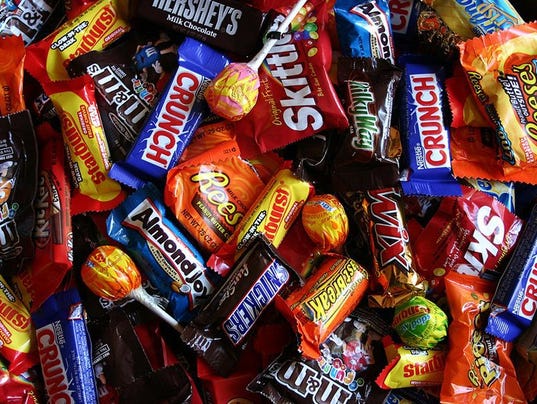
Happy Halloween and happy Mad Science day! Since it's getting close to Halloween, we did two candy-centric experiments in Mad Science today.

When the kids walked into the room, I had it split in half using dividers. On one side of the room there were tables set up with four cups per station, and four candy corn pumpkins in front of the cups. These stations also included a pencil and a half-sheet worksheet that I made (click to see larger image):


After all the kids came in and got settled, I poured a small amount of each liquid into each of their four cups: vinegar, hydrogen peroxide, canola oil, and rubbing alcohol. After everyone had all their liquids, I let them (gently!) drop one pumpkin into each cup.

We talked about what we saw happening right away. Some of the pumpkins were bubbling slightly. Others had turned on their side. Still others had a small amount of their coloring floating off of them already. I asked the kids to make their predictions based on what was already happening to the candy. They all thought the rubbing alcohol pumpkins would dissolve completely in half an hour, but weren't sure about the rest of the liquids.

At this point, we moved to the other half of the room. It was set up with clear tubs filled about halfway with water, a new half-sheet worksheet (click to see larger image), and a selection of wrapped Fun Size candy on the tables. After they chose their stations in the new part of the room, I explained that we would be doing a float/sink experiment while we waited for our pumpkins to change. 

Image result for halloween candy


I talked for a brief moment about density. I don't like to do very intense science lessons in this program, but it is nice to give them some vocabulary words and write them on the board so they know what they're seeing while it's happening. We learned that if something is more dense, it sinks, and if it's less dense, it floats. We talked about what can make an item less dense, like having air pockets or being hollow even if it is solid (a good segue into talking about the Three Musketeers candy later... MillenniaLibrarian thinks ahead :p). 

As a group, we predicted whether we thought the Fun Size Starburst candy would float or sink in the water. I had them circle their prediction, and also took a vote and wrote how many of our group members thought the candy would float vs. sink. We had some food allergies in the group, so it was up to each child whether they would unwrap their candy or not. 

When I tried this experiment earlier today, all the candies sunk except the Three Musketeers, which floats because of their air pockets in its filling. However, I was experimenting with all the candies unwrapped. When I heard a shriek halfway through testing the Starburst, I thought someone had splashed water on themselves. They were actually shrieking from pure delight because their wrapped candy was floating, while their neighbor's unwrapped one had sunk! It didn't even occur to me to try them both wrapped and unwrapped. 

As a group, we figured out that when they were unwrapped, every candy except the Three Musketeers sinks, but all of them float when they are still in the wrapper. The kids decided this must be because of the air trapped inside the sealed plastic wrappers. I love that this happened, because they taught me something I hadn't even considered when planning this experiment. 

After our amazing density discoveries, we came back to our pumpkin cups to judge their progress and fill our our other worksheets. I wasn't able to get any pictures of our experiment, but here is one from the website I lovingly stole the idea for the experiment from, Lemon Lime Adventures:

Source: Lemon Lime Adventures
This is what the pumpkins in the rubbing alcohol and peroxide looked like. I left a few in for another half hour after the program, and they dissolved completely. The oil completely preserved the candy. The vinegar softened it, but did not totally dissolve it in the time allotted.

In the experiment example I followed, the pumpkins were fished out of their liquids and copied in drawings. For my program, we left the pumpkins in, but did draw them after their time in the cups and observe how they changed.
Source: Lemon Lime Adventures

I believe my Halloween candy experiments were a hit with all the 6-12-year-olds who came to my program today. I have to admit that Mad Science isn't my favorite program to run because of the science aspect (I am a humanities girl all the way), and how structured it needs to be in order to work as an hour program. However, the kiddos always have a good time. I will leave you with this cute conversation I had with a third grader after the program.

Kid: Are you a science teacher?
Me: Today I am.
Kid: What about the other days?
Me: I'm a librarian.
Kid: What does that mean?
Me: It means I'm an everything teacher!
Kid: And you give books too?
Me: Yeah, I give books too. 

Tuesday, October 3, 2017

Baby Lapsit 10-3-17

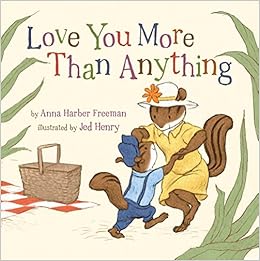
Today, after saying hello to everyone, I read Love You More Than Anything by Anna Harber Freeman. I love this book because it's sweet, it rhymes, and it's a great one to read one on one with your baby.

Image result for love you more than anything book

Our lap bounce portion began, as always, with "Bumpy Road." Grownups are instructed to seat their baby facing forward on their laps and bounce along with me as I demonstrate with a roughly baby-sized teddy bear. Here is the chant:

Bumpy road, bumpy road. (Bounce baby on lap)
Smooth road, smooth road. (Move baby smoothly back and forth)
Bumpy road, bumpy road. (Bounce baby on lap)
Smooth road, smooth road. (Move baby smoothly back and forth)
Rough road, rough road! (Bounce baby higher than before)
Bumpy road, bumpy road. (Bounce baby on lap)
Rough road, rough road! (Bounce baby higher than before)
Hole! (Hold baby under armpits and let them fall between your legs)

Lap bounce songs were "Walkin' Ol' Joe," "Milkshake," and "Popcorn." 

I have to talk about "Milkshake" for a minute, because it's a fantastic song for all ages of kids. For babies, it's a lap sit. For toddlers and preschoolers, it's a great movement/get the wiggles out song. There really is no wrong time to sing the milkshake song. Here is her version, and also the wonderful Jbrary's a capella version. 


Finally, we pretended to be popcorn with Raffi, twice through because this song is very short. 


Because the public library is all about inclusion, I like to emphasize diversity in storytime as much as possible. Our second board book today was The Family Book by Todd Parr. 

Image result for the family book todd parr

I talk up Todd Parr whenever I read one of his books to a group. The art in his books are simple and brightly colored, which hold young children's attention. More importantly, the message in every single book is one of diversity and acceptance. In The Family Book, there is a different type of family on each page. It normalizes adoption and mixed race families ("some families are the same color, some families are different colors"), working families, single parent families, same-sex parents, families where the grandparents are the primary caregivers, and a bunch of other nontraditional family units in a way even the youngest kiddos can understand. We have a diverse group in Baby Lapsit, most notably several grandmothers who bring their grandbabies, and I wanted to highlight different types of families with them today to remind all our storytimers that the public library is a place for everyone. 


Our last movement song before saying goodbye was "One, Two Hands" by Laurie Berkner. I love this song because it teaches body parts and helps kids practice counting to 10. I like to tell the parents that my goal is this catchy tune getting stuck in their head, so they go home and keep practicing these skills with their babies.


Until next time!