Usually after Learn and Grow with Rhythm and Flow (LGRF), I host a half-hour program where kiddos can play with musical instruments that we don't use in the storytime and make a DIY instrument of their own with household objects. The first four months that I did this program, it got harder and harder to collect enough recycled objects to make the instruments as the numbers for the program grew. Luckily, around the time I figured that out, we were also trying to spend the rest of our budget before the end of the fiscal year.
I knew I wouldn't be doing the DIY instrument component of the program anymore, but still wanted to keep the spirit of Music Lab alive. So, I requested a large set of musical instruments from Lakeshore Learning, some ribbon bells, and some star-shaped tambourines. Armed with my snazzy new toys, I entered Music Lab today with confidence that the program will be just as fun without a craft component. In addition to the new instruments, I set out our sets of egg shakers and rhythm sticks. 84 people came to LGRF, and the number grew to 101 for Music Lab! Judging by the pictures, it looks like everyone had a great time with the instruments.
Bubbles!
Baby making music
Exploring the ribbon bells
Friends making music
This lil dude bonded with his tiny cymbals
Big group!
They figured out new uses for some instruments, like this tambourine drum
Time for my annual Pride display! Pride Month is like Christmas for me. I joke that it's the only month of the year I get to be gay at work. It's not, my workplace is super inclusive and accepting, but it IS the time of year that I get to hang rainbows everywhere with relative impunity! This year, I focused on YA fiction and nonfiction books, but invited the whole staff to add books as they found them.
Throughout the month, a lot of books made their way through the display. You can also check out 2017's display list for more titles. Here are the ones you can see in the photo:
Traffic by Ellen Hopkins (YA fiction)
Carry On by Rainbow Rowell (YA fiction)
Two Boys Kissing by David Levithan (YA fiction)
Queer America by Vicki Lynn Eaklor (YA fiction)
Stonewall by Ann Bausum (YA/adult nonfiction)
And She Was by Jessica Verdi (YA fiction)
The Apocalypse of Elena Mendoza by Shaun David Hutchinson (YA fiction)
Being Transgender: What You Should Know by Thomas E. Bevin (YA/adult nonfiction)
At the Edge of the Universe by Shaun David Hutchinson (YA fiction)
Ship It by Britta Lundon (YA fiction)
FML by Shaun David Hutchinson (YA fiction)
The First Man-Made Man by Pagan Kennedy (Memoir)
Hold Me Close by David Levithan (YA fiction)
Here We Are Now by Jasmin Warga (YA fiction)
Alice and Frida Forever: A Murder in Memphis by Alexis Coe (YA/adult nonfiction)
Journey to Same-Sex Parenting by Eric Rosswood (YA/adult nonfiction)
Becoming an Ally to the Gender-Expansive Child by Anna Bianchi (YA/adult nonfiction)
To draw even more eyes to the display at the front of the library, one of my volunteers made this bulletin board strategically placed in the teen area. The writing on the shooting star reads, "Check out the PRIDE display in the front lobby!"
If it ain't broke, don't fix it. Over the last few months I've found this program is best structured as unstructured play time. I lay out egg shakers, rhythm sticks, and other musical instruments, and let the kids explore whatever they're attracted to. I also set up the craft as a station in one corner of the room, so families can drift over a few at a time instead of all at once. Especially since many of the participants just got out of the 30-minute structured program Learn and Grow with Rhythm and Flow, this more relaxed setup has been pretty successful.
All you need for this project are two spoons, a plastic egg, dry beans, and packing or duct tape. Fill the egg with beans (rice would work too, but would be messier), tape a spoon on each side, and you've made your own egg shaker with a handle for little hands to easily grab! We used packing tape because you can still see the color of your egg through the clear tape. Duct tape would be fun if you have colored or patterned tape, or plan to decorate it with markers or stickers.
I was once again too busy running the program to take pictures, but it was fun! I got some very positive verbal feedback from a couple of moms, that they like how I make this program both fun and educational. LGRF and Music Lab will be going on a hiatus for the summer while I focus on teen volunteers and theater day camp, but it'll be back in August!
The Project: Wax Paper and TP Roll Kazoo
This is a classic DIY musical instrument, and very easy to make. All you need is a toilet paper roll, a square of wax paper, and a rubber band. To jazz them up, I also put out stickers for the kids to decorate their instrument.
The most basic version
I learned something interesting while watching the kiddos and their grownups put this instrument together: a kazoo made out of a toilet paper roll takes more intentional humming than a manufactured kazoo. You have to position your mouth just so at the opening of the roll, and leave an opening for the air to get out, or the humming sound won't happen. When you figure out just the right position, the instrument does make a very satisfying vibration along with the hummmmmmm...
This is another project that we did during Build Your Own Musical Instrument last summer. At the time, this sign accompanied the project. Today's program was much smaller, so I just verbally explained how to make the kazoo and showed the one I had made as an example.
Program Structure
Today's structure was very similar to February's, with the program being more of a drop-in free play situation rather than an instructional class. I like the Music Lab much better this way since it does follow my Learn and Grow with Rhythm and Flow storytime, which is 30 minutes of intense brain work for the kiddos as they dance, sing, and make music.
In addition to the craft station, I laid out jungle bells, cymbals, and wood giros with scrapers (I didn't know the term for them before Google, but these things have been in every preschool classroom in America since the 80's). Another low-stress and successful educational music program!
The Project: Drum/Shaker Instrument
This was an instrument that I kind of cobbled together from several different ideas of DIY instruments from household objects. I found a very cool drum made from a balloon stretched over the opening of a plastic cup, and that was going to be the project.
Think these, but made with Solo cups because tin cans are hard to find these days and the edge can be dangerously sharp.
After I thought about the cup drums for a while, I thought about the big empty space inside the plastic cups. We had the large size already in the supply cabinet so that's the size I planned to use (think college dorm party Red Solo Cups), and that seemed like a waste of materials. So, I delved deep into the same closet and found a giant bag of uncooked rice. I figured if you add a handful of rice before stretching the balloon over the cup's opening, you'd have a drum AND a shaker!
The supplies for this project ended up being uncooked rice, large plastic cups, and balloons. We also needed scissors to cut the ends off the balloons. The picture shows rubber bands to keep the balloons on, but I didn't find rubber bands necessary when using plastic cups. Tip if you're thinking of doing this project: HAVE EXTRA BALLOONS AVAILABLE! I didn't realize it when I made my demo drum, but balloons have a tendency to break if you're stretching them in unnatural ways. I ended up having to leave the room during the program to grab more balloons, which is something I try my best not to do.
Another tip that never even crossed my mind until it was a real-life situation: beware of latex allergies when working with balloons. There was one child who's mom had to do some quick redirecting when they realized the craft involved balloons because of skin allergies. I try to remember food allergies, but often forget there are other types of allergies that can be just as serious. Luckily, this particular mom was very adept at redirecting her kiddo without any kind of tantrum or hurt feelings. In the future, I plan to announce the supplies aloud in case a kiddo has an allergy or sensitivity.
Program Structure
I was much happier with the Music Lab program this month. In January, I structured it more like an instructional program where we made our instruments and then learned chants together as a group. Today, I put out a couple containers of instruments as well as the instrument-making station and structured the program as a drop-in. This worked better for me since Music Lab happens directly after Learn and Grow with Rhythm and Flow (LGRF) and it sometimes takes a few minutes to recover from high-energy storytimes like that.
It also worked great for this craft in particular since it involved loose rice. I forgot that toddlers and any tiny, loose craft supply (rice, glitter, etc.) equals a big mess. Structuring the program this way allowed me to be in slightly more control of the rice and keep the mess in one area of the room for easier clean-up.
Before this morning, I was seriously considering cancelling future occurrences of program because it didn't have a solid direction and I wasn't sure it was a good library program. However, I got some great positive feedback from parents, singing the praises of the two programs together for their mix of education and entertainment. That coupled with a participant number over 70 has inspired me to keep Music Lab for Kids going for a few more months and see if it works out as a companion to LGRF.
I wasn't able to take many pictures because the morning was very busy, but I did get these two. It was a fun morning and another learning experience as a still-pretty-new programming librarian!
The Project: Noisemakers from Pool Noodles
We've all seen the musical instrument that looks like a wooden block with a piece of sand paper glued to one side. When you rub two together, they make a satisfying sound that adds depth to a musical combo.
The real version of sand blocks is also a great musical tool for preschoolers. The only thing they don't do when you make them out of pool noodles is loudly clap together...but like the teacher in the above video mentions, that sound is the enemy of every adult in the room. So maybe it's okay if our noisemakers can only be rubbed together.
If you're an avid reader of my blog (which almost no one is, so don't feel bad), you might remember this project from last summer when we made it during our huge Build Your Own Musical Instrument program. Since there were several options for instrument projects at that program, I made this poster to explain how to turn a pool noodle into a safe, fun, and easy noisemaker:
Today's group was much smaller and more attentive, so I was able to verbally explain the directions and there was no need for a sign.
To prep this craft, all I did was cut pool noodled into 3-inch pieces. I left them otherwise intact, leaving the splitting in half to the kids and their grownups. I figured it was a good opportunity to develop some fine motor skills. And don't worry, I handed out very dull plastic knives so there were no injuries to tiny fingers.
After everyone had cut their noodle in half, we learned two chants and a song that you can use the instrument with.
Chant 1: Rain on the Rooftop
Learning this chant happened in several stages.
1. Practice counting to four on an even beat (one-two-three-four-one-two-three-four etc.)
2. Each time you say a number, scratch your noisemaker one time.
3. Change it up; scratch the noisemaker on "one," "two," and "three," and put them on your shoulders on "four."
4. When thee group mostly gets that down, say the rhyme instead of counting out loud.
If you're musically inclined, you will recognize this as being in 4/4 time starting on the down beat.
Here is the rhyme, showing where each number of the beat falls:
Rain on the rooftop
1 2 3 4
Rain on the tree
1 2 3 4
Rain on the green grass
1 2 3 4
But none on me!
1 2 3 4
And here it is with Xs showing when you should scratch your noisemaker:
Rain on the rooftop
X X X
Rain on the tree
X X X
Rain on the green grass
X X X
But none on me!
X X X
With this exercise, I gave the parent tip that breaking down simple 4/4 rhythms by counting is a great way to start understanding how rhythm works.
Song: B-I-N-G-O
Our second exercise was one everyone knows. After the mind-bender that was Rain on the Rooftop, we needed something fun and easy. We sang the song B-I-N-G-O, but every time we dropped a letter, we scratched our noisemaker instead of clapping. The group loved it! I hung up this visual aid to help the grownups (and any kids already reading words) follow along.
Chant 2: Hippo on the Bus
Even though the kids were getting pretty wiggly by this point, we had ten minutes left in the program and I had one more chant up my sleeve. I've used it before and it's always a major hit. Instead of the usual method of making a beat by slapping our thighs, today we made the beat with our noisemakers. We tried out a few different speeds, including a super fast one that was just for fun. This seemed like the perfect way to end the program.
A hip, a hip, a hippopotamus
Got on, got on, got on a city bus
And all, and all, and all the people fussed...
STOP SQUISHING US!
(On that last line, squish your cheeks in from both sides so your mouth looks funny and speech is distorted, as if you were being squished by a hippo. Today we squished our faces with the halves of our noisemakers, which made it extra funny.)
Even though running this program kept me busy, I was able to get the group together with their noisemakers for a picture at the end. I'm so glad they had fun!
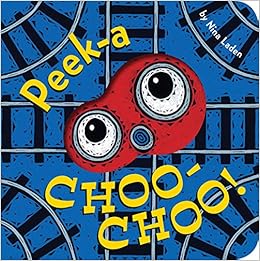
After our introthis morning, the first book we read was Peek-a Choo-Choo by Nina Laden. I like this board book for a transportation-theme storytime because it also includes a theme I like to use as much as possible with the infants: peek-a-boo! Even though lots of them are under a year old and might not be ready for the level of dialogic reading a book like this requires, I think they still have fun seeing the colorful pictures and playing peek-a-boo.
Next it was time for our lap bounce journey and it began, as always, with "Bumpy Road." Grownups are instructed to seat their baby facing forward on their laps and bounce along with me as I demonstrate with a roughly baby-sized teddy bear. Here is the chant:
Bumpy road, bumpy road. (Bounce baby on lap) Smooth road, smooth road. (Move baby smoothly back and forth) Bumpy road, bumpy road. (Bounce baby on lap) Smooth road, smooth road. (Move baby smoothly back and forth) Rough road, rough road! (Bounce baby higher than before) Bumpy road, bumpy road. (Bounce baby on lap) Rough road, rough road! (Bounce baby higher than before) Hole! (Hold baby under armpits and let them fall between your legs)
For our musical lap bounce today, we used "Wheels on the Bus" and "Hurry, Hurry, Drive That Firetruck."
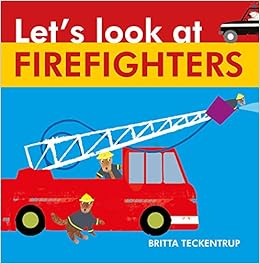
After the lap bounce, our second story was Let’s Look at Firefighters by Britta Teckentrup. I related the things in this book back to the firetruck song, which provided a nice amount of structure that reminded everyone of our theme today.
Finally, we sang "Row, Row, Row Your Boat" to throw in another form of transportation. As a bonus, this one includes a verse of "tickle, tickle, tickle your boat" which is always fun for babies and grownups alike.
Finally, it was time to say goodbye and then have bubbles and toys. Another successful "things that go" storytime; I feel like you can never use this theme too many times!
We're only a third of the way through 2018... I might as well share what I've been doing differently in our Toddler Time hello and goodbye since roughly January.
First of all, I have made an amazing discovery about the 16-36 month age group. They are not smaller preschoolers; they are bigger babies! Toddlers are basically infants with the ability to run away from you. For this reason, I have decided to disconnect my Toddler Time and Preschool Storytime activities, and instead more closely link Toddler Time and Baby Lapsit.
In Toddler Time, we now begin with an a cappella greeting song instead of one with recorded music. I changed it because I feel the toddler age group benefits the most from chanting and singing without musical accompaniment. It makes it easier to sing the songs with their grownups at home, and they'll remember the songs more if their voices are the only thing making the music.
Here is our *shiny and new* good morning song:
Hello: "This Is the Way We Wave Hello"
(Wave both hands)
This is the way we wave hello,
Wave hello, wave hello.
This is the way we wave hello,
Hello, hello, hello!
(Clap hands to the beat)
This is the way we clap hello,
Clap hello, clap hello.
This is the way we clap hello,
Hello, hello, hello!
(Stamp feet to the beat)
This is the way we stamp hello,
Stamp hello, stamp hello.
This is the way we stamp hello,
Hello, hello, hello!
(Wave both hands)
This is the way we wave hello,
Wave hello, wave hello.
This is the way we wave hello,
Hello, hello, hello!
This video shows the melody we sing to, but it uses different lyrics.
The other two hello songs are the same as 2017. They are good for both toddler and preschool audiences, and "Open, Shut Them" comes with a built-in parent tip.
Warming Up Motor Skills: "Open, Shut Them"
On this song we do the movements described in the lyrics: open our hands, close our hands, clap three times, put our hands in our lap, creep our fingers up to our chin, and don't let them in our mouths.
My parent tip: It's great to do a motor skill-strengthening exercise like this once a day with your toddler. You can make it fun with a game or a song, and it will help strengthen their muscles and help with coordination as their bodies and minds develop.
Stretch: "Tall/Small"
This is a short, easy stretch the preschoolers get a kick out of. While we're stretching, I like to encourage them to reach for the ceiling, touch their toes, then make themselves into a tiny ball.
This is where the rest of the storytime comes in. And then...
Goodbye: "This Is the Way We Wave Goodbye"
Know what's great for tiny, developing brains? Repetition.
Know what's great for tiny, developing brains? Repetition.
(Typed it twice to make a point.)
Our goodbye song for Toddler Time is now also a cappella, and a repeat of our new hello song. We just substitute "hello" for "goodbye." Doing this song twice per storytime gets the melody and movements in the kids' heads that much quicker. If they're not scream-singing "This is the way we blankety-blank" about everything they do for the rest of the week, I haven't done my job.
(Wave both hands)
This is the way we wave goodbye,
Wave goodbye, wave goodbye.
This is the way we wave goodbye,
Goodbye, goodbye, goodbye!
(Clap hands to the beat)
This is the way we clap goodbye,
Clap goodbye, clap goodbye.
This is the way we clap goodbye,
Goodbye, goodbye, goodbye!
(Stamp feet to the beat)
This is the way we stamp goodbye,
Stamp goodbye, stamp goodbye.
This is the way we stamp goodbye,
Goodbye, goodbye, goodbye!
(Wave both hands)
This is the way we wave goodbye,
Wave goodbye, wave goodbye.
This is the way we wave hello,
Goodbye, goodbye, goodbye!
Bubbles! "One Little, Two Little, Three Little Bubbles" and the Yo Gabba Gabba Bubbles Song
The last thing I do at every storytime is blow bubbles. The kids go crazy over them! I play the same songs every time so they get to know that after we say goodbye, we have bubbles for the duration of two songs, and then storytime is over until next week. Our regulars know this is the way it always goes, which is a great introduction to establishing routines in other aspects of life as they grow.
After our NEW usual hello, our first story at Toddler Time this morning was Green Lizards vs. Red Rectangles by Steve Antony. I have mixed feelings about this book for toddler storytime. The text density (words per page) are pretty spot-on for the two to three age group. I did notice by some grownups' faces that they didn't like how often words like "fight" and "war" come up. But, others were really enjoying it. I probably won't be using this book for storytime again, but it would be nice for one-on-one reads.
Our two movement songs today were "Clap Your Hands" and "One, Two Hands," because you can't practice naming your body parts enough.
To calm everyone down after our dance party and get ready to hear another story, I used the "Everybody Do This Just Like Me" chant. This one is interesting because you need to change up the movements often to keep the kids interested. The point is for them to watch your movements and try to follow what you do, instead of wiggling around. You might have to repeat the first verse 2 or more times. I wouldn't move on to "Everybody sit down" until the group is calm, listening, and ready to sit.
Everybody do this just like me (movement 1)
Everybody do this just like me (movement 2)
Everybody do this just like me (movement 3)
Everybody do this just... (movement 1)
Like... (movement 2)
Me. (movement 3)
(motion for kids to sit down)
Everybody sit down quietly
Everybody sit down quietly
Everybody sit down quietly
Everybody sit down just... like... me.
Our felt story today was "What's In the Pocket?" It involves six objects hiding behind six different colored pockets.
I had the pockets up on the felt board before storytime began so that no one knew what was under each one. Before we started, I explained to the kids that I would give them a clue that rhymed with the object's name. They had to listen to the rhyming word AND the clue to figure out what's in the pocket. Admittedly, this is more of a preschool concept and mostly the almost-kindergarten-ready older siblings got it. Naming the color of each pocket before I read the clues was more where our target Toddler Time audience was at, so I made sure to focus on that.
Our last movement song today was "The Freeze" by Greg and Steve. All the kids understood the concept for this one; dance when there's music, freeze when it stops.
Finally, it was time to say goodbyeuntil next time.
February is National Bird Feeding Month! This was a very cool program conceived and planned by Sara, but carried out by me because she was out sick. I actually debated posting it on my blog because this program was not technically mine, but I love the idea and the pictures of all the kids with their finished bird feeders. I figure as long as I don't take credit for the idea, we're good to go.
The Bird Feeder Challenge was a program for school-age kiddos, and had three basic parts. First, we talked about all the aspects that make up a good bird feeder, and why. Second, the kids had some time to make their own bird feeders out of found objects, Crisco (in lieu of peanut butter in case of allergies), and bird seed. Third, each child got a chance to stand up in front of the group and tell us about their bird feeder.
First, we made a list of everything a bird feeder needs to be successful. Here is what they came up with:
I left this list up so they could refer back as they constructed their own feeders.
The building process:
After the building time was over, some of the kids were reluctant to tell everyone else about their creation. A couple of them preferred to sit instead of stand, but eventually all twelve kiddos told us where the bird(s) stand, how they get their food, and what is special about their creation.
In addition to being lots of messy fun, there was an important educational element to this program. The actual construction of the bird feeders encourages STEAM concepts such as engineering and architecture.
If I were to do this program again, the only thing I'd change is taking a little more time at the beginning to talk about bird feeder construction before launching into the list-making. Luckily this group all had a pretty good idea of what a bird feeder is, but not all kids do. This was actually a suggestion made by a mom. I learn something new with every program I present!
Here are some of the kids with their finished bird feeders (posted with parent permission).